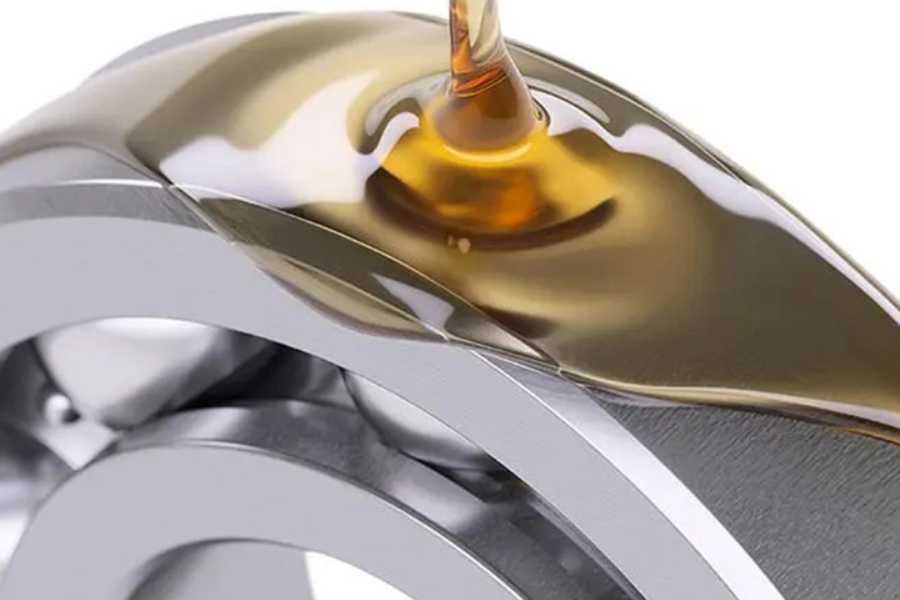
What are the main factors affecting bearing lubricants?
The company mainly produces three core series of products: cylindrical roller bearings, self-aligning roller bearings, and thrust self-aligning roller bearings. The product can be adapted to multiple industrial fields such as metallurgical equipment, mining machinery, heavy machinery, engineering equipment, etc., and can meet the operational and load-bearing requirements of equipment under different working conditions.
SZ Bearings
Bearing lubricants play a crucial role in mechanical equipment; not only do they reduce friction and wear in bearings, but they also effectively prevent overheating and corrosion, thereby ensuring the stable operation of the equipment and extending its service life. However, bearing lubricants are subject to various factors during operation, which may alter their performance and consequently affect the operating condition of the bearings. The following section will explore in detail the main factors that influence bearing lubricants during operation.
I. Temperature Factors
Temperature is one of the key factors affecting the performance of bearing lubricants. In high-temperature environments, the viscosity of the lubricant decreases and its fluidity increases, which may result in a thinner oil film and reduced lubrication effectiveness. At the same time, high temperatures accelerate the oxidation and decomposition of the lubricant, producing acidic substances and deposits that further damage both the bearings and the lubricant itself. Conversely, in low-temperature environments, the viscosity of the lubricant increases and its fluidity decreases, potentially leading to poor lubrication and difficulty in starting the bearings.
II. Load Factors
The magnitude of the load borne by the bearing also affects the performance of the lubricating oil. Under high loads, friction and wear in the bearing intensify, requiring more lubricating oil to form a sufficient oil film to protect the bearing. However, an excess of lubricating oil may result in an overly thick oil film, increasing frictional resistance and consequently reducing lubrication effectiveness. Therefore, selecting a lubricating oil suitable for the load conditions and controlling the appropriate oil volume is crucial for bearing lubrication.
III. Speed Factors
The rotational speed of the bearing also affects the performance of the lubricant. In high-speed rotating bearings, the lubricant must possess superior fluidity and shear stability to form a stable oil film and maintain lubrication effectiveness. At the same time, high-speed rotation generates more heat, requiring the lubricant to have good heat dissipation properties to prevent the bearing from overheating. Therefore, selecting a lubricant suitable for the bearing’s rotational speed and maintaining good heat dissipation conditions are crucial for bearing lubrication.
IV. Contamination Factors
Contamination is another significant factor affecting the performance of bearing lubricants. During use, lubricants are inevitably contaminated by impurities such as moisture, dust and metal particles. These contaminants reduce the cleanliness and stability of the lubricant, leading to oil film breakdown and increased bearing wear. Consequently, maintaining the cleanliness of the lubricant, as well as regularly changing and filtering it, are essential measures to ensure the proper operation of bearings.
V. Lubricant Ageing Factors
Over time, bearing lubricating oil gradually ages and loses its original properties. The ageing process involves oxidation, thermal decomposition and mechanical shearing, which can lead to increased viscosity, darkening of the oil, elevated acid numbers and the formation of deposits. Aged lubricating oil not only reduces lubrication effectiveness but may also cause damage to the bearings. Consequently, regular inspection and replacement of aged lubricating oil are crucial for maintaining the normal operation of bearings.
VI. Factors Related to Mixing Lubricants
In practical applications, lubricants of different brands or grades are sometimes mixed. Such mixing may lead to unstable or reduced lubricant performance, or even cause adverse reactions and damage to the bearings. Therefore, when selecting and using lubricants, one should strictly adhere to the equipment manufacturer’s recommendations and requirements, and avoid mixing lubricants of different brands or grades.
In summary, bearing lubricants are primarily influenced by factors such as temperature, load, speed, contamination, oil degradation and the mixing of different lubricants during operation. To ensure the normal operation of bearings and extend their service life, it is necessary to select lubricants suitable for the equipment’s operating conditions, and to regularly inspect and maintain the lubrication system to preserve the cleanliness and stability of the lubricant. At the same time, care must be taken to avoid mixing lubricants of different brands or grades to ensure stable and reliable lubrication performance.